
A practical seasonal guide
Fall & Winter Rodent Prevention
Before you close up the cabin or stack another feed bag in the shop, check what else might be moving in.
For homes, businesses and rural properties around Eufaula & Lake Eufaula, Stigler and McAlester. Need help with activity already inside? Start with Bret’s year-round rodent control service.
Shelter, food & a way in
Cooler weather is a good time to check.
Mice look for shelter before winter, even though they live near people throughout the year. Kitchens, storage rooms, garages and shops can offer food and cover. Barns with feed and lake homes left unoccupied deserve a look, too.
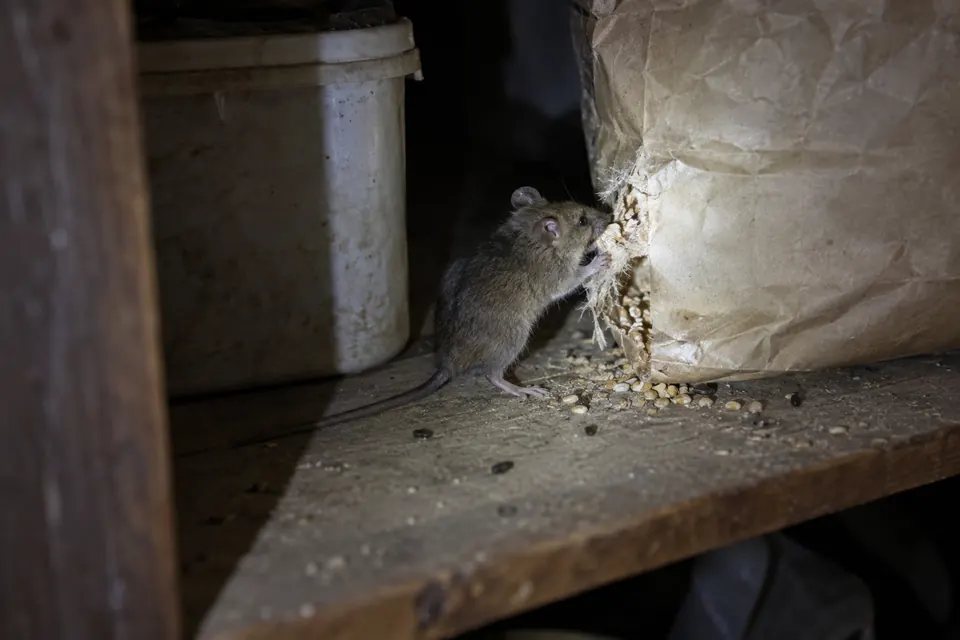
Listen for scratching and look for droppings, gnawed food or feed packaging, and shredded nesting material. These signs are a reason to investigate; they do not tell you the size of a problem by themselves.
Seasonal behavior and signs: Oklahoma State University.
Where to look
Small clues in everyday places
Kitchens & storage rooms
Look along shelf edges and around dry-food packaging for gnaw marks, crumbs and droppings.
Garages, shops & barns
Check feed storage, cluttered corners and seldom-moved items for nesting material or chewed bags.
Cabins & lake homes
On each visit, check quiet rooms and stored supplies. Note new signs and when you last checked the property.
Give the problem less time
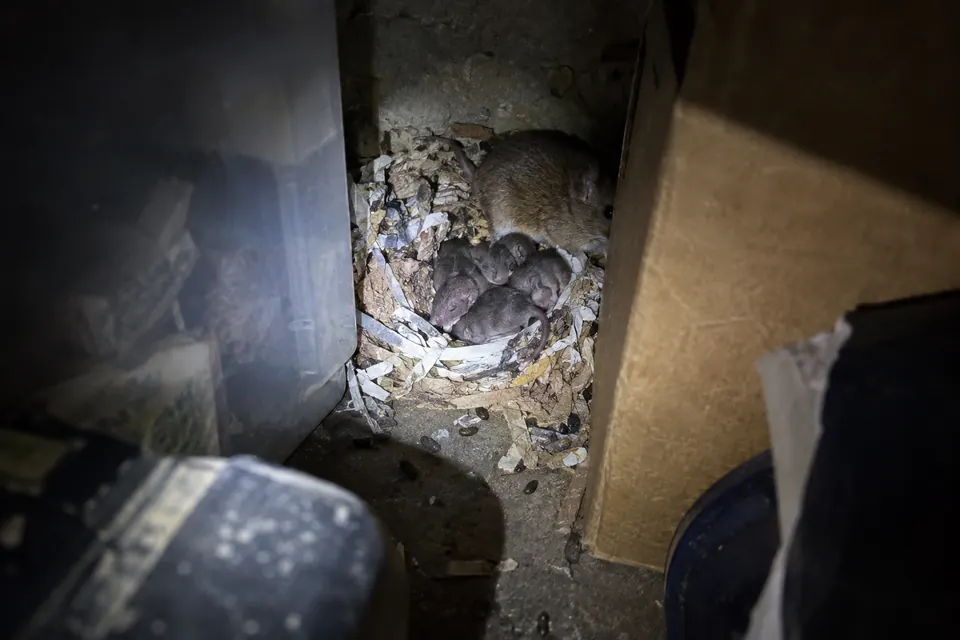
A quiet corner can become a nesting spot.
A female house mouse may produce 5–10 litters a year, usually with 5–6 young per litter. Young may reach reproductive maturity in 6–10 weeks. These are biological possibilities, not a forecast for your property.
Beyond reproduction, gnawing can damage wiring and building materials, and rodents can contaminate food and stored feed. Early inspection helps you address activity and the conditions supporting it.
Prevention and warning signs: Oklahoma State University. House-mouse biology and entry gaps: University of Missouri Extension.
A short property check
Make food and shelter harder to find.
House mice can squeeze through openings slightly wider than ¼ inch. A gap that looks minor can be worth discussing with Bret.
Entry size: University of Missouri Extension.
- Inspect access points. Look at door gaps, utility openings and other accessible gaps around the building.
- Protect food and feed. Use tight-fitting storage containers and keep spilled food from accumulating.
- Reduce nesting opportunities. Cut back clutter and keep stored items organized so changes are easier to spot.
- Plan accessible sealing. Ask Bret which entry points can be sealed appropriately and what prevention steps fit the property.
Talk directly with the owner
Tell Bret what you’re seeing.
Send the town, building type, location of the signs and how long you have noticed them. Mention whether a lake home sits empty, a barn holds feed or a business needs access arranged.
Bret provides mouse/rat inspection, removal, trapping, baiting, prevention and sealing of appropriate accessible entry points. He will discuss the next step for your building.
Questions for Bret
- Are mice and rats only a cold-weather problem?
- No. They can be a year-round issue. Fall is a useful reminder to check food storage, quiet spaces and entry gaps before colder weather.
- Does one mouse mean there are more?
- One sighting does not establish how many are present. Tell Bret where and when you saw it and whether you have noticed droppings, gnawing or nesting material.
- Can Bret seal entry points?
- Bret can seal appropriate accessible entry points as part of rodent prevention. He will explain which gaps he can address after inspecting the building.
- What should I send before a visit?
- Send your town, building type, where the signs appeared and when you first noticed them. Mention stored feed, pets and any access arrangements for a cabin or outbuilding.